

-
By
Marie-Christine Flibotte
December 10 2025
-
Industrial applications
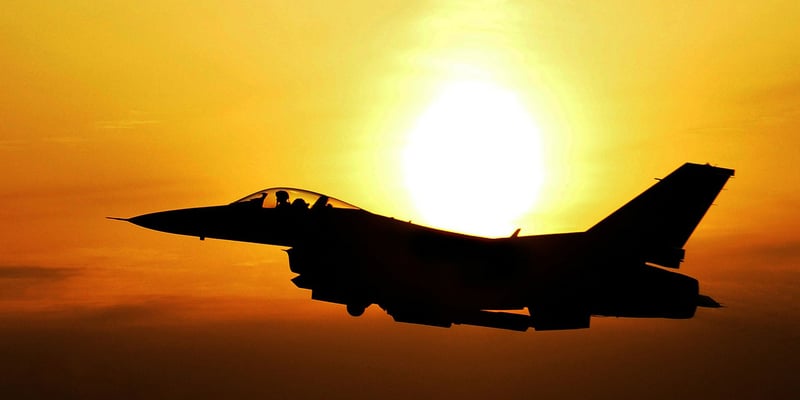
Demand for additive manufacturing is rapidly gaining ground in the defence sector. In a context where defence means and methods are constantly evolving, and governments are increasing their investments in military equipment, this trend is expected to continue.
As technologies become more reliable and the range of available materials expands, the global defence industry must remain proactive to ensure the security of territories and populations.
A true strategic asset, additive manufacturing combines speed, flexibility, and the ability to produce critical custom parts. It reduces costs, accelerates innovation, and increases operational responsiveness, without compromising performance or reliability. Discover how additive manufacturing integrates effectively into the defence sector.
Applications of 3D Printing in the Defence Industry
Benefits of Additive Manufacturing in Defence
Additive Manufacturing Materials for Defence
Case Study: Additive Manufacturing in Defence
The future of Additive Manufacturing in Defence
The Importance of Choosing the Right Military Additive Manufacturing Partner
Applications of Additive Manufacturing in the Defence Industry
3D printing offers great versatility in the defence sector, with concrete applications at every stage of equipment lifecycle.
Low-Volume Production
Some defence projects require the production of a small number of parts. Additive manufacturing is particularly effective for designing and producing parts such as:
- Aeronautical components: for drones, aircrafts, helicopters
- Interior and exterior components of military vehicles
- Satellite and defence space system components
- Customized soldier equipment: personalized protective gear, splints, exoskeleton interfaces
Rapid Prototyping
One of the main advantages of additive manufacturing is its ability to create a part directly, without using a mould. This design freedom translates into increased agility and efficiency, allowing R&D experts to design prototypes and validate their physical and mechanical properties. Examples include:
- Rapid prototyping of aeronautical components (cabin panels, internal ventilation ducts…)
- Prototyping of customized soldier equipment
- Marketing or sales parts, used for key presentations
Specialized Tooling
Those working in the defence sector often need tools designed for specific requirements. Again, additive manufacturing, thanks to its great flexibility, allows designers to create and produce customized, lightweight tools, thereby improving equipment efficiency, ergonomics, and operator comfort.
- MRO tooling
- Composite lay-up tooling
- Assembly seats
- Production aids and jigs

Benefits of Additive Manufacturing in Defence
Additive manufacturing is a preferred approach to develop and design complex parts with high mechanical requirements, including thermoplastic parts. Some benefits include:
- Optimizing the supply chain
- Reducing production costs compared to traditional methods
- Facilitating implementation and design of specific complex parts
- Minimizing environmental footprint in terms of material usage and energy consumption
Additive Manufacturing Materials for Defence
Additive manufacturing gives access to an increasingly wide range of materials. For the defence sector, the most commonly used thermoplastics are PEKK, ULTEM™, various polyamides such as Nylons and carbon-fiber reinforced Nylons. Other materials are also used depending on the type of part and its application.
Essential properties of materials in defence include:
- Excellent thermal and chemical resistance
- High resistance to shocks and vibrations
- An optimal strength-to-weight ratio
- Low flammability and low smoke emission
- High mechanical strength
Beyond these performances, materials often need to comply with rigorous standards and certifications (e.g., UL 94 V-0 for flammability, FST requirements for fire, smoke, and toxicity, as well as various aerospace and military standards). These standards ensure that printed components meet the strict safety, reliability, and compliance requirements of the defence sector.
It is also important that the parts supplier maintains a quality assurance (QA) system and a continuous improvement process based on recognized methodologies.
The additive manufacturing service provider must have the necessary infrastructure and master production and quality processes to provide reproducible and traceable parts.
Case Studies: Additive Manufacturing in Defence
In the defence sector, time constraints, performance requirements, and the complexity of components make innovation particularly challenging. The case studies below illustrate how additive manufacturing helps overcome these challenges.
Solving Design Problems with Functional Prototypes
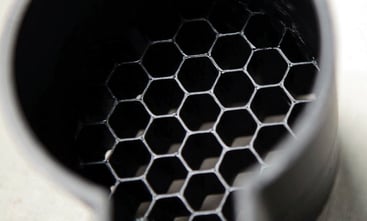
When time constraints become an obstacle to innovation, additive manufacturing offers a solution. This is what a manufacturer of heating, ventilation, and component systems for various types of vehicles—including military vehicles—discovered. This manufacturer needed high-performance prototypes in record time.
The manufacturer required custom parts that were both lightweight and robust, while the traditional supplier had long production lead times, jeopardizing delivery schedules.
Thanks to FDM 3D printing (fused deposition modelling) technology, the company was able to rapidly produce custom prototypes, significantly reducing lead times while maintaining high standards of quality and performance.
Prototyping Polycarbonate Wiring Ducts
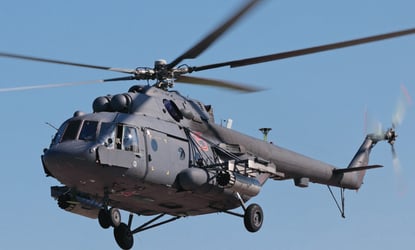 During an experimental upgrade of aircraft tail wiring, technicians at Bell Xworx's rapid prototyping lab prioritized Fortus printers' industrial FDM technology to produce durable polycarbonate wiring ducts. The ducts were installed in six coupling sections inside the Osprey’s dual vertical stabilizers to test the wiring in the field.
The Future of Additive Manufacturing in Defence
3D printing is beginning to redefine operational support and maintenance in the military: replacement parts produced more locally, reduced lead times, and increased autonomy for deployed equipment.
The evolution of technical thermoplastics such as PEKK, ULTEM™, PPSU, or PA also opens new opportunities for defence. Their mechanical strength, light weight, and thermal stability make them strategic allies for the 3D printing of tomorrow.
These materials will allow not only the production of critical parts with increased reliability, but also next-generation equipment that is lighter and higher-performing. Their potential helps enhance troop mobility, reduce logistical delays, and increase technological superiority on the field.
The Importance of Choosing the Right Military Additive Manufacturing Partner
Having a competent additive manufacturing partner is essential to ensure the quality and reliability of parts, especially for critical applications in the defence sector. Expertise in processes, material mastery, and design optimization enable you to fully leverage 3D printing capabilities, reducing errors and enhancing component performance.
Strategic support, from R&D to final production, enables the creation of robust, reliable parts perfectly suited to operational needs, while reducing lead times and costs. With proven expertise, teams can offer tailor-made solutions, whether for functional prototypes, production parts, or specialized tooling.
To realize these advantages and turn your projects into operational success, Solaxis positions itself as a trusted Canadian ally. With advanced industrial 3D printing expertise and certified materials, Solaxis supports clients in producing complex, durable, and field-ready parts.
If you work in the defence sector and want to innovate, validate a concept, or produce low-volume parts, our team of professionals will be happy to advise you.