

-
By
Marie-Christine Flibotte
June 10 2026
-
Applications industrielles
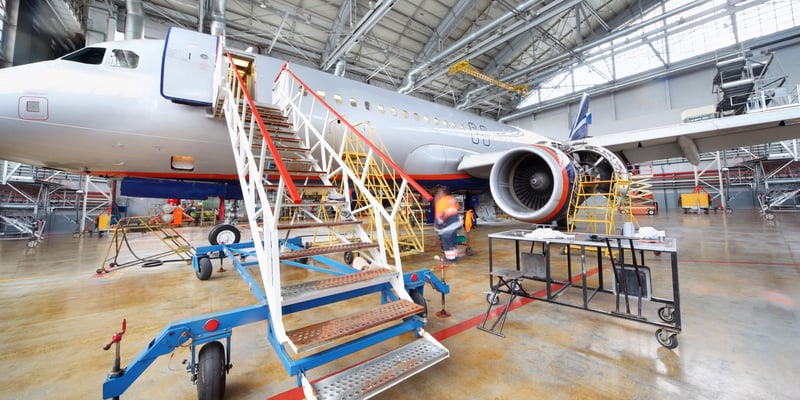
In an industry where every gram saved translates to improved fuel efficiency and where innovation drives progress, additive manufacturing offers numerous benefits for the aerospace sector. Far from being just a technological promise, 3D printing has become a strategic pillar in the production of aircraft interior components, delivering tangible advantages throughout their lifecycle - from design to maintenance.
Why such enthusiasm? Because this technology is revolutionizing how critical components are both designed and produced in the industry. Now, we even have solutions available to support the certification process for 3D-printed parts.
From weight reduction, to cost savings, efficiency gains, production agility, and regulatory compliance, discover the key advantages 3D printing brings to the aerospace industry.
Reducing Weight Without Compromising Strength
One of the key strengths of 3D printing lies in its ability to create parts that are both strong and lightweight, an essential balance in aerospace. Thanks to additive manufacturing techniques, you can now use less material without sacrificing strength or mechanical performance by using materials with highly favourable strength-to-weight ratios.
With high-performance thermoplastics - such as ULTEM™ 9085 or Antero PEKK - certifiable to stringent FAA and NIAR standards, manufacturers can produce optimized components that are well-suited for aviation’s demanding environments.
Today, 3D printing unlocks a new level of design freedom that enables advanced geometries: thinner walls, internal honeycomb structures, consolidation of multiple parts into a single element… all of which help significantly reduce mass while maintaining high mechanical properties. This weight reduction isn’t just a technical win, it directly translates into lower fuel consumption, saving tens of thousands of litres per aircraft per year.
|
Reducing the weight of one interior aircraft part by a single pound can mean 14,000 fewer gallons of fuel consumed per year. |

Reducing Costs Without Compromising Quality
3D printing eliminates the need for traditional tooling, no expensive moulds or dies are required to produce parts. This manufacturing freedom leads to a significant drop in fixed costs, which is especially advantageous for small-batch production of aircraft interior parts, customized components, or frequently updated parts.
Part consolidation is another strategic advantage of additive manufacturing. Aircraft are made up of tens of thousands of components, many of which are complex or require assembly. 3D printing allows manufacturers to combine multiple parts into a single functional piece, produced in a single step. This approach reduces not only the number of components to be manufactured but also the assembly operations, error risks, number of suppliers involved, production timeframes, and ultimately, costs.
Gaining Agility with On-Demand Production
In aerospace, developing or replacing a part can take several months. 3D printing drastically shortens these cycles: a part can move from concept to production in a matter of weeks. In some cases, lead times can be cut from six months down to six weeks. This agility is particularly valuable for producing spare parts or rapidly adapting to configuration changes.
3D printing also enables digital inventory management and improves supply chain performance. A distributed manufacturing model becomes feasible: instead of shipping physical parts, digital files are sent and printed locally, reducing delays, transport costs, and carbon footprint.
Certification and Compliance: The Right Systems Make All the Difference
Producing flight-ready parts demands high levels of traceability, repeatability, and regulatory compliance. Industrial systems like those from Stratasys meet these requirements, with printers integrated into digital quality control workflows. These systems provide:
- Traceability of material batches (origin, storage)
- Complete tracking of print parameters
- Automated compliance reporting
- Integration into quality systems such as AS9100
Combined with already qualified materials (such as ULTEM™ 9085, recognized by Boeing and Airbus), these solutions help accelerate the certification process while ensuring the reliability required for aerospace applications.
Solaxis: A Strategic Additive Manufacturing Partner for Aerospace
At Solaxis, we offer our technical expertise and production capacity to meet the aerospace sector’s high standards. Our materials are certified, our processes validated, and our team fully understands the challenges of certification, traceability, and expected performance.
In a rapidly evolving industry where customization and speed are increasingly essential, industrial additive manufacturing is much more than a technical innovation, it’s a strategic response to the modern challenges of aerospace.